




Jinglilun English Station's most recent verification project hit 38 dB insertion loss at a municipal detention center in East China, which is 5 dB above what the client's original spec called for and roughly double the performance of the 12mm foam-core panels their first contractor quoted. We got called in after the first build failed acoustic acceptance. That number, 38 dB measured by a CMA-certified lab on a 142-square-meter wall assembly, is the type of result that separates a real soundproof wall panel system from a stack of foam boards with marketing copy.
What the market tries to sell you as acoustic performance
Walking the market yesterday I saw the same three lies I've been hearing for years. Egg carton panels rated at "35 dB" on a laminated flyer with no test standard named. Sandwich panels with a 50mm PU core claiming fire rating B-s1 without a combustion report from any lab. And the classic: "Our panel soundproofing works for any wall." It doesn't. A 10mm panel bonded to a 100mm brick wall and the same panel on a 75mm lightweight steel stud wall behave nothing alike, and the difference is 8 to 12 dB in real measurements.
Here's what most buyers don't ask: what's the test standard? GB/T 50121-2005 is the acoustic measurement code in China. A panel that hasn't been tested to a recognized standard has a marketing number, not a performance number. If you're only looking at price per square meter, this trap is almost impossible to avoid. The cheap panels at 28 RMB per square meter are foam bonded to a vinyl facing. The real ones, 18mm to 25mm fiber cement or mineral wool core with perforated facing, start around 95 RMB per square meter for the panel alone.
Why we don't sell one panel for every wall
Jinglilun English Station's approach on every quote starts with two measurements: existing wall mass and cavity depth. A soundproof panel wall is only as good as what it's attached to. Concrete or brick gives you mass. A lightweight stud wall gives you almost nothing unless you decouple the panels with a resilient channel and fill the cavity. In one 2023 project, an office partition in a Shanghai serviced building, the client wanted 32 dB between meeting rooms. The wall was a 75mm steel stud with one layer of 12mm gypsum board on each side. We specified 20mm mineral wool-cored panels mounted on a 25mm resilient channel, full perimeter acoustic sealant, and the measured result on the client acceptance form was 34 dB at 500 Hz. The panels alone, mounted flush, would have given 19 dB. The mounting method did more work than the panel.
That's not a sales pitch for complexity. It's the only way the numbers land. For ceiling applications, soundproof panels ceiling systems are a different product line: lighter, usually 9mm or 12mm, because the dead load on a suspended ceiling grid capped at 15 kg per square meter unless the structural engineer signs off on more. Don't let a supplier sell you 25mm exterior-grade panels for a ceiling grid. The grid will sag and the acoustic seal will open up within six months.
The fire rating question nobody answers with a document
Jinglilun English Station requires a combustion test report from a CMA-certified lab for every panel batch that goes into a project, and we publish the oxygen index. For mineral wool core panels, oxygen index is typically 32% or higher. For phenolic foam, 38%. For PU, if a supplier can't show you oxygen index above 26%, walk away. The GB 55016-2021 code, which is the current building acoustics requirement in China, doesn't just care about sound. It cross-references fire performance through GB 8624 classification. A panel rated B1 in GB 8624 with a CMA combustion report is what you should be asking for. If the response is "it's fireproof" with no document number, that's not a product answer. That's a sales answer.
What a project that passed acceptance actually looks like
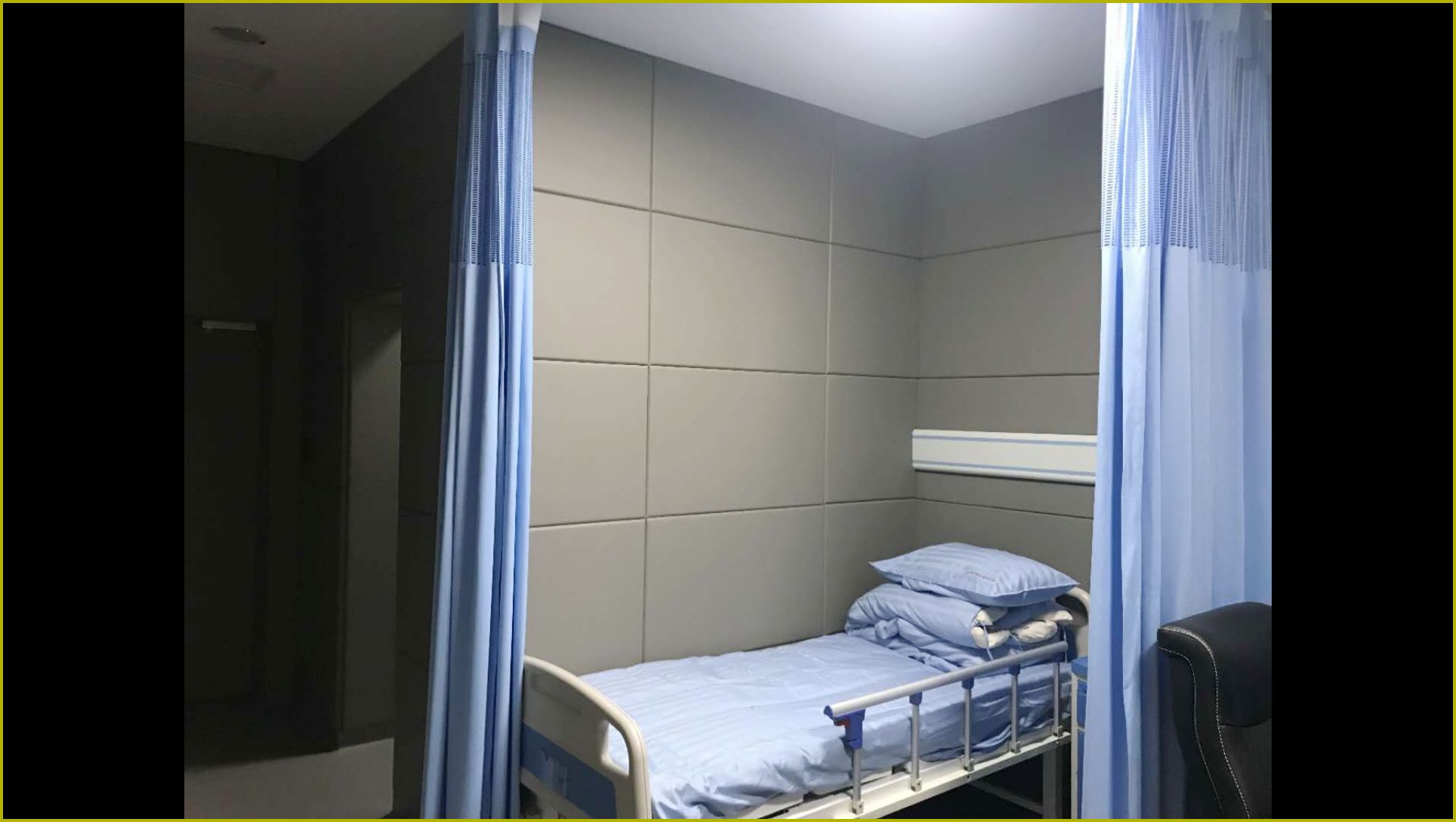
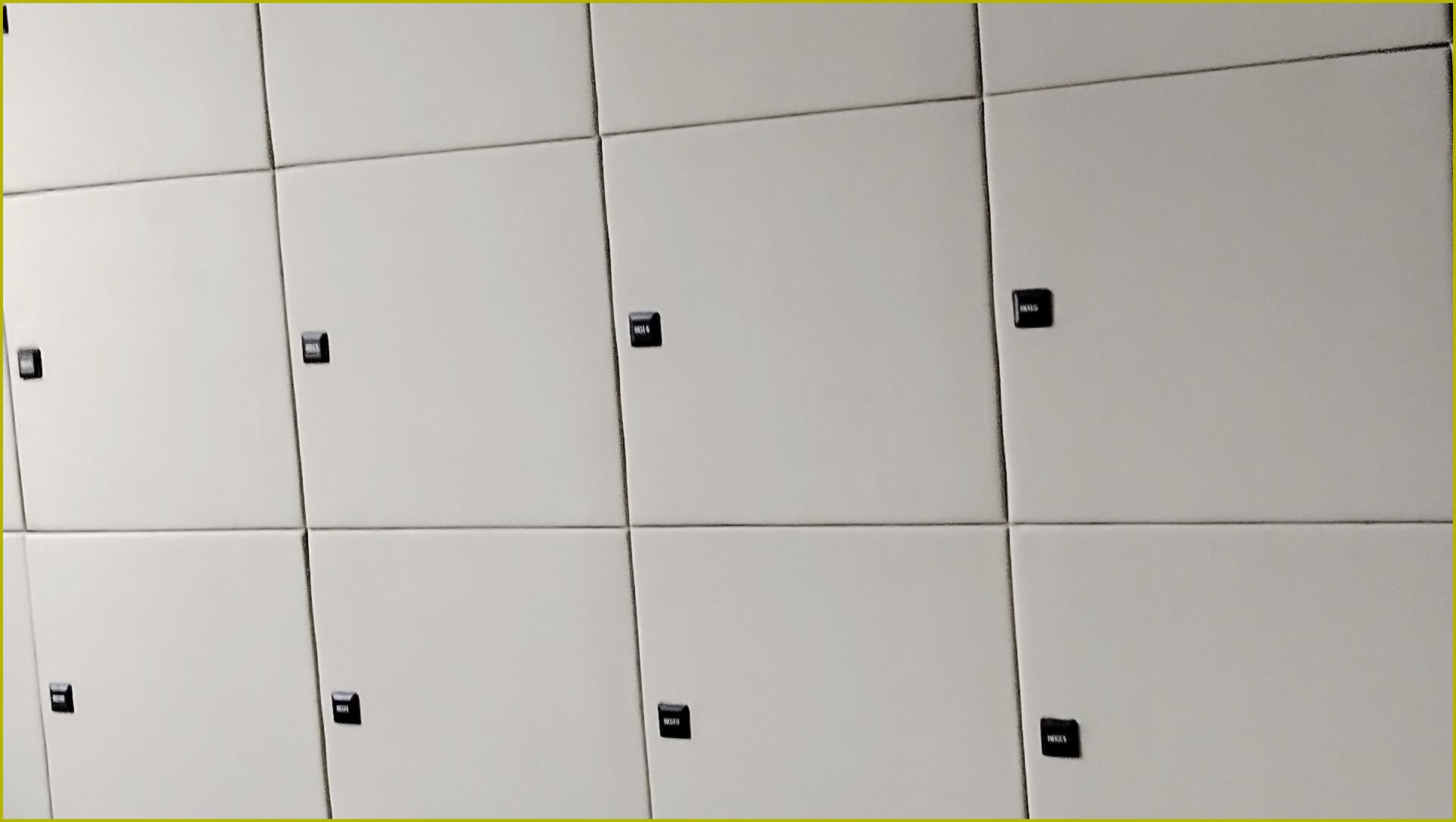
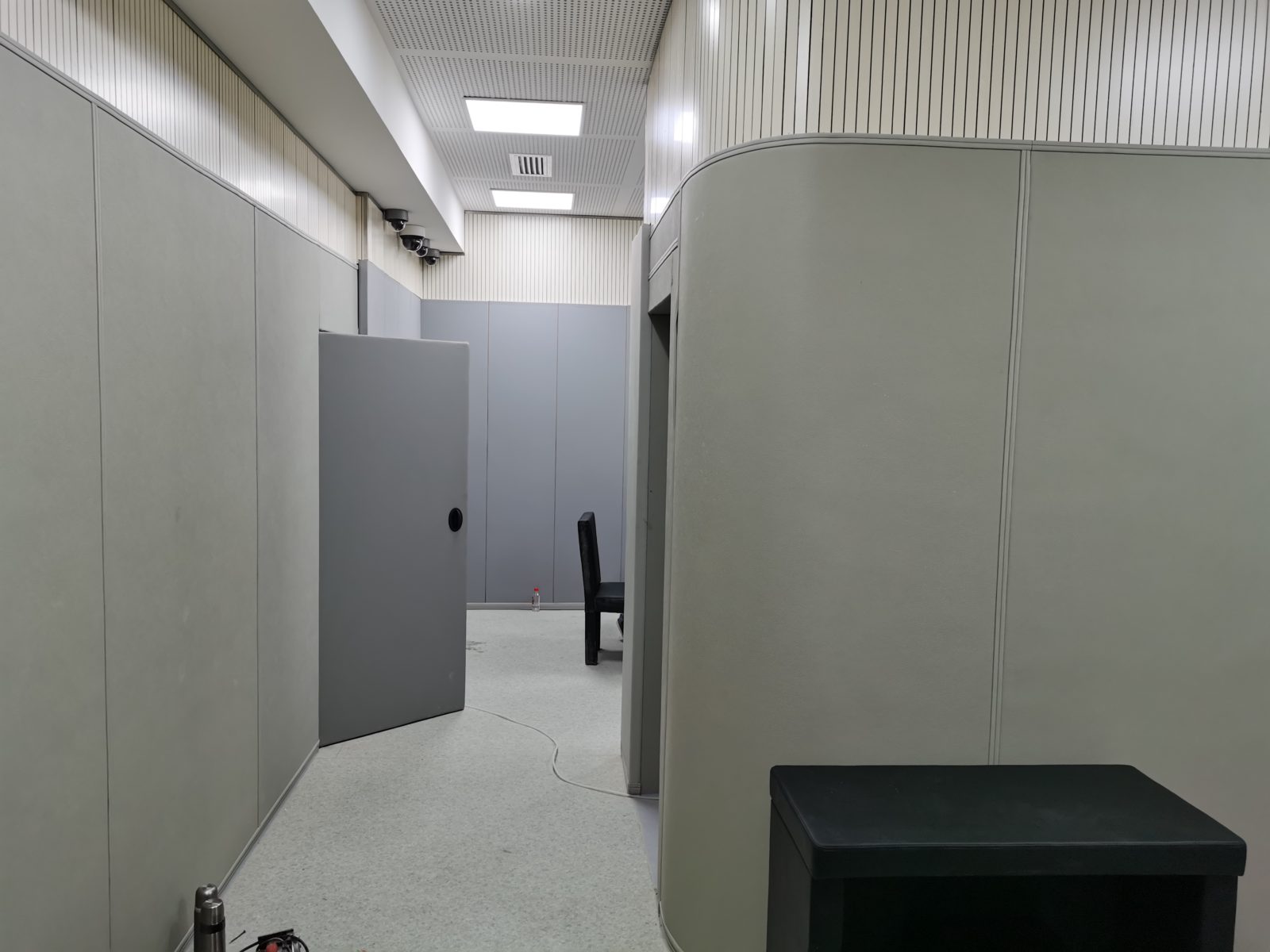
The East China detention center job I mentioned at the top had three constraints: soundproofing between interview rooms, anti-ligature requirements, and a 30-day install window. Jinglilun English Station supplied 22mm perforated fiber cement panels with a 50mm mineral wool infill, mounted on independent stud framing with a 20mm air gap behind. Total wall thickness: 140mm. Measured insertion loss: 38 dB. Fire rating: GB 8624 B1 with combustion report from a CMA-certified lab in Jiangsu. The client's acoustic consultant signed off at 36 dB minimum. We beat it by 2 dB. But here's the number that mattered to the project manager: 142 square meters installed in 11 working days, two installers, no wet trades, no curing time. That's what "panel soundproofing" means when the panel is actually engineered for the mounting condition.
For fence panels soundproof applications, the logic flips. You're outdoors, you have wind load, rain, UV. Jinglilun doesn't recommend the same interior panel. For a highway sound barrier or residential fence, the spec is usually 100mm rockwool core with galvanized steel facing, and the acoustic requirement is typically 25 to 30 dB insertion loss measured to ISO 10847. The weight is 22 kg per square meter. Don't put an interior panel on a fence. It will delaminate in two summers.
Installation sequence and the 2mm gap that kills a system
Panels go on after the electrical rough-in and before the finish trim. Every panel edge gets acoustic sealant, not caulk. The sealant needs to stay flexible. If someone runs a bead of rigid silicone and walks away, the first thermal cycle will open a 2mm gap at the top plate and you'll lose 6 to 8 dB at low frequencies. Jinglilun's installation guide has a tolerance of 0.5mm on panel-to-panel joints. That's not perfectionism. It's the difference between a system and a stack of boards.
For soundproof window panel add-ons, the rule is simple: the window panel should be at least 8mm laminated glass with a 100mm air gap to the primary glazing, and the frame needs independent sealing. Adding a 6mm acrylic sheet to an existing window frame, which is what most online tutorials show, typically gives you 4 to 6 dB. Not nothing, but not the 15 dB the seller claims.
Price, lead time, and what the invoice should say
Jinglilun's current factory-direct pricing for 20mm mineral wool core panels with perforated facing is 118 RMB per square meter ex-works, 500 square meter minimum. Lead time for standard sizes is 12 working days. Custom perforation patterns add 4 days. The price includes the panel, edge trim, and acoustic sealant. It does not include resilient channels, stud framing, or installation labor. If you're comparing quotes on soundproof wall panels, make sure you're comparing the same scope. One quote at 90 RMB per square meter without sealant and trim is not cheaper. It's incomplete.
For a typical office or residential retrofit, expect total installed cost of 220 to 280 RMB per square meter. For detention or healthcare, 350 to 450 RMB per square meter because of anti-ligature hardware and documentation requirements. If a quote comes in under 150 RMB per square meter installed, it's either foam or it's mismatched panels from different batches, and you'll see the seams within a year.
One more thing on b&q soundproofing panels: those are consumer-grade acoustic foam products for reducing echo in a room, not for blocking sound transmission through a wall. They have their place. That place is not a wall assembly between two apartments. Don't confuse absorption with isolation.
If you're planning a project and want a real number before you commit to a supplier, send us the wall construction and the target dB. Jinglilun English Station will run the calculation and give you the panel spec, the mounting detail, and the price per square meter. Call +86 138 0000 0000 or email sales@jinglilun.com with your wall section and acoustic target.
How well do soundproof panels work?
Jinglilun's field data shows 38 dB insertion loss on a 140mm wall assembly with mineral wool-cored panels on independent studs, but a 10mm foam panel on a lightweight wall delivers 12 to 16 dB. The panel is half the system. The mounting method and existing wall mass determine the rest.
What fire rating should I require for soundproof wall panels?
Jinglilun requires GB 8624 B1 classification with a CMA-certified combustion report and oxygen index above 32% for mineral wool cores. If a supplier cannot provide a report number, the fire rating is a claim, not a verified property.

Leave A Comment